Dog owners report that their dogs scratch multiple times a day. A little scratching is normal. Remember that dogs scratch to relieve minor irritation, remove dirt, or just adjust their fur.
But when your dogs scratch constantly then it can be a major issue. Continuous itching may indicate primary health problems that need attention. Too much scratching can damage their skin, get hair loss, lead to infections, and discomfort.
So, if you are wondering “why is my dog itching so much?”, then this guide will help you understand the reasons and what to do.
In this article, we will discuss the most common dog itching causes, warning signs to watch for, and effective treatment options that can help your pet feel comfortable.
Why Do Dogs Scratch?
Scratching is normal for dogs. It helps them relieve minor skin irritation, remove parasites, or groom themselves.
But, to be frank when scratching becomes more frequent, it means something is bothering your dog’s skin. Dogs may scratch their ears, belly, paws, neck, or tail area.
So, scratching sometimes is normal. But if your dog is scratching constantly, it is necessary for you to know the main cause.
Why Scratching Becomes a Problem?
Remember that, every scratching is not harmful. But if your dog is scratching excessively, then it can cause a bigger health problem.
You should be concerned if –
- Your dog scratches all day or night
- Skin becomes red or inflamed
- Hair loss appears in patches
- Your dog bites or chews their skin
- There are wounds or scabs
- A strong odor comes from the skin
These can be symptoms of dog skin infection which requires proper treatment.
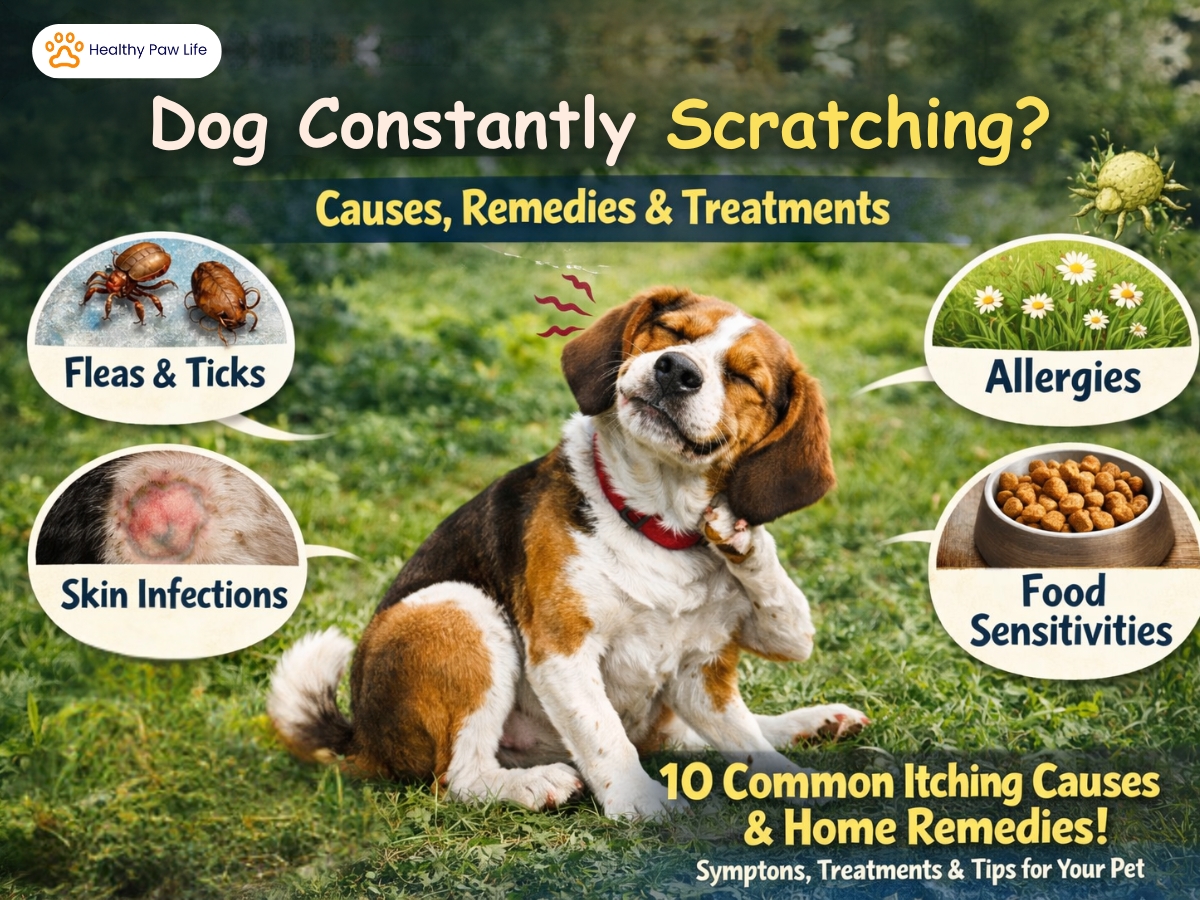
10 Common Causes of Dog Scratching
Now, let us explore some common dog itching causes –
1) Fleas and Ticks
Fleas and ticks are one of the most common reasons a dog scratches constantly.
Even a few fleas can cause major itching problems. Some dogs are allergic to flea saliva, this can cause itching worse.
Signs include –
- Scratching around the tail base
- Small black flea dirt on the skin
- Biting or chewing the skin
- Red irritated spots
So, regular flea control treatments can help prevent this issue.
2) Skin Infections
When your dog scratches too much then they may develop bacterial skin infections breaking the skin barriers.
Common dog skin infection symptoms include –
- Red patches on the skin
- Bad odor
- Pus or discharge
- Scabs or sores
- Hair loss
These infections require vet treatment and medicated products.
3) Mange
In mange, microscopic mites that live on the skin cause the disease.
There are two main types of mange in dogs –
- Sarcoptic Mange – extremely itchy and contagious
- Demodectic Mange – causes hair loss and skin irritation
Dogs who have mange may scratch extremely and develop bald patches.
4) Allergies
The most common reason why my dog itches so much is allergies.
Dogs can develop allergies from –
- Pollen
- Dust mites
- Grass
- Mold
- Flea bites
Allergic reactions often cause itching around the paws, ears, belly, and face.
5) Dry Skin
One of the reasons your dog is itchy is dry skin. This problem is more common during winter or in dry climates.
Signs of dry skin include –
- Flaky skin
- Dandruff
- Mild itching
- Rough coat texture
By improving hydration, nutrition, and grooming can help reduce dry skin.
6) Fungal Infections
Fungal infections like yeast infection can cause severe itching and irritation.
These infections can occur in warm and moist areas like –
- Ears
- Paws
- Skin folds
The symptoms may include redness, strong odor, and greasy skin. Proper antifungal dog treatment is important to eliminate these infections.
7) Poor Grooming
Regular grooming is important for dogs. If grooming is not done properly then it can lead to dirt buildup, tangled fur, and trapped moisture on the skin. This will create the perfect environment for bacteria and parasites; and lead to itching. So, regular grooming will help keep your dog’s skin healthy and prevent irritation.
8) Parasites
Many other parasites can cause itching besides fleas and ticks.
These include –
- Lice
- Mites
- Worm-related skin irritation
Parasites can cause intense scratching, skin inflammation, and hair loss. So, a vet is necessary for this cause to diagnose and recommend the right treatment.
9) Environmental Irritants
Sometimes, environmental factors can irritate your dog’s skin.
These may include –
- Cleaning chemicals
- Perfumes
- Pesticides
- Certain fabrics or carpets
If your dog starts itching after contact with something new, environmental irritants may be the cause.
10) Food Allergies
Some dogs react to ingredients like –
- Chicken
- Beef
- Dairy
- Wheat
- Soy
Food allergies can cause itching around the ears, paws, and belly. It can also cause digestive issues. So, a balanced diet will help to reduce food allergy symptoms.
Signs the Scratching is Serious
Mild itching may resolve without treatment, but severe itching should not be ignored.
Watch for these warning signs –
- Constant scratching and biting
- Bleeding skin or open wounds
- Thickened or darkened skin
- Persistent ear infections
- Sudden hair loss
- Swelling or discharge
If you notice these skin infection symptoms of dogs, then it is important to consult a vet.
How to Treat Dog Itching?
Understanding the cause of the problem is the key to finding the right dog scratching treatment for your pet. Here are some effective ways to manage itching –
1) Regular Grooming
Grooming tips include –
- Brush your dog regularly
- Bathe with mild dog shampoo
- Keep the coat clean and dry
- Trim long hair around sensitive areas
So, proper grooming reduces dirt buildup and improves your dog’s skin health.
2) Medicated Shampoo
Medicated shampoos are used to treat itchy skin, infections, and parasites.
They help –
- Reduce inflammation
- Kill bacteria and fungi
- Soothe irritated skin
3) Skin Creams and Topical Treatments
Did you know topical creams and sprays can calm your dog’s irritated skin and speed up their healing.
They may include ingredients that –
- Reduce inflammation
- Treat infections
- Kill parasites
- Moisturize dry skin
Remember that you should always follow your vet’s advice when you use any creams.
4) Veterinary Care
If your dog is scratching constantly and the problem does not improve, then you should consult your vet.
A vet may perform tests like –
- Skin scraping
- Allergy testing
- Blood tests
- Fungal or bacterial cultures
These tests will help them determine the cause of the itching so that they give your dog a proper treatment.
Best Products for Dogs’ Skin Problems
Some products are formulated to treat skin conditions in dogs. The most common option is lime sulfur products like lime sulfur shampoo, creams, dips, etc.
These products are effective for treating –
- Mange
- Fungal infections
- Bacterial infections
- Parasites
Lime sulfur treatments will help remove mites and microorganisms which cause itching. However, vet’s consultancy is important.
Dog Itching Home Remedies
There are some simple dog itching home remedies that can help mild cases of itching.
Helpful remedies include –
1) Oatmeal Baths – Oatmeal helps soothe irritated skin and reduce inflammation.
2) Coconut Oil – Applying small amounts to dry areas can moisturize the dog’s skin.
3) Apple Cider Vinegar Spray – Diluted vinegar can help reduce bacteria and itching
4) Aloe Vera – This natural ingredient can calm irritated skin.
But, before trying these home remedies, you should always consult a veterinarian.
Prevention Tips for Dog Skin Problems
Follow these tips to keep your dog’s skin healthy –
- Use regular flea and tick prevention
- Maintain proper grooming routines
- Feed a balanced and high-quality diet
- Keep your dog’s bedding clean
- Avoid harsh chemicals around pets
- Schedule regular vet checkups
Final Thoughts
Seeing your dog constantly scratching can be worrying, but the good news is that most itching problems are treatable once the cause is identified.
From fleas and allergies to infections and dry skin, there are many reasons behind why my dog itches so much. Understanding these causes allows you to take the right steps toward relief.
With proper grooming, effective dog scratching treatment, and veterinary guidance, you can help your pet stay comfortable and healthy.
If the scratching persists or worsens, don’t ignore it. Early treatment can prevent serious skin problems and keep your dog happy, healthy, and itch-free.